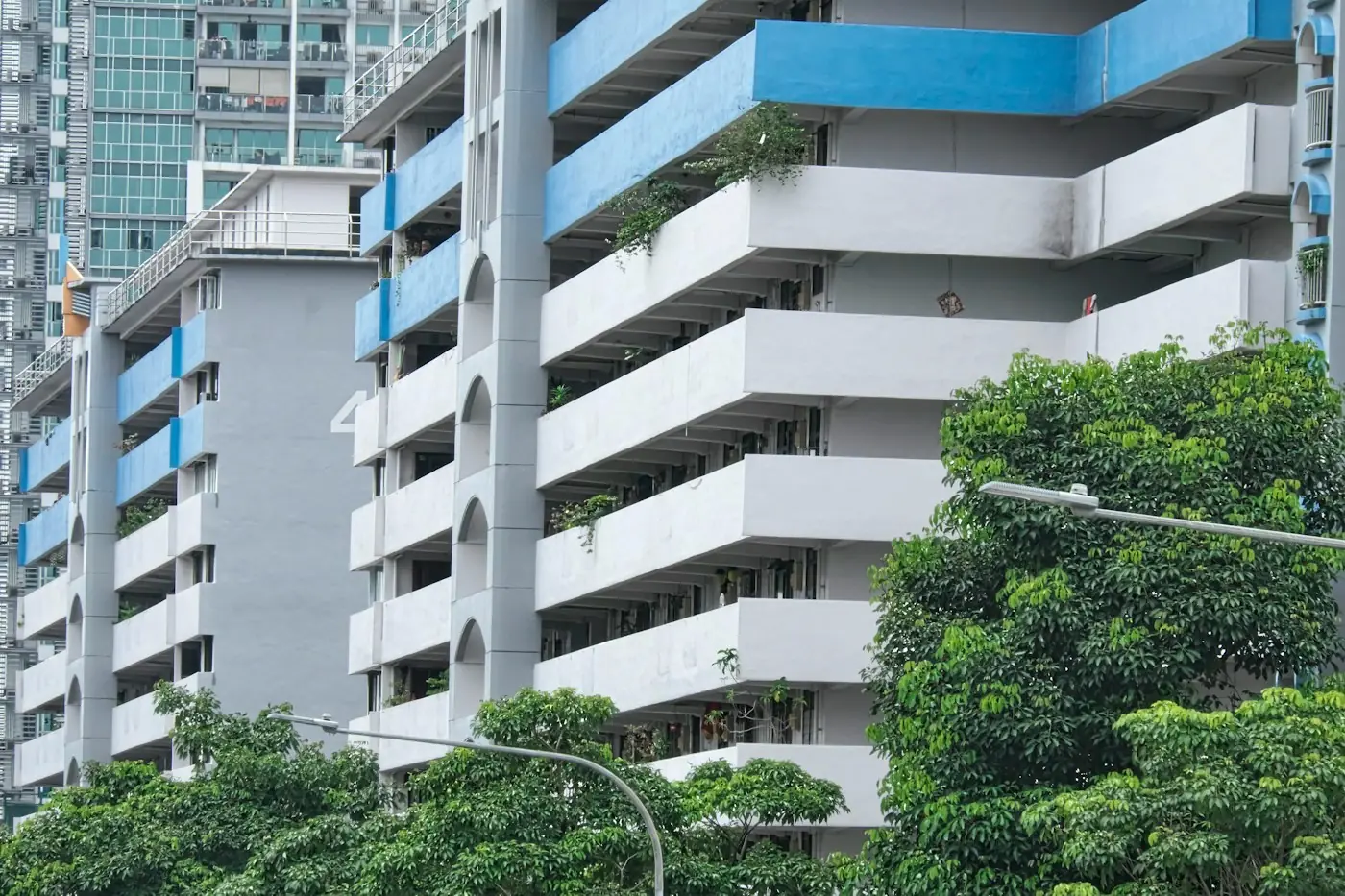
At a glance
- What it is
- All owners sell a private development together, usually to a developer
- Consent today
- 80% (10 years or older), 90% (under 10 years), by share value and strata area
- Passed 8 Sep 2026
- 70% for 40 to 59 years, 65% for 60 years and older; start date to be gazetted
- Typical timeline
- Up to about two years from committee to completion
- HDB equivalent
- SERS, a compulsory acquisition by the government
The short answer
En bloc is the everyday name for a collective sale: the owners of a private condo or apartment development sell every unit, plus the land, to one buyer in a single deal. The buyer is usually a developer who will redevelop the site. If enough owners agree and the Strata Titles Board or High Court approves, the sale binds everyone, including owners who voted no. Each owner then gets a share of the price. We checked the rules against the Ministry of Law on 14 October 2026.
How much consent an en bloc needs
The threshold depends on the age of the development, counted from its latest TOP or CSC. Owners who agree must hold the required share both by share value and by strata area.
| Age of development | Consent needed today | Under the 2026 amendments |
|---|---|---|
| Under 10 years | 90% | 90% |
| 10 to 39 years | 80% | 80% |
| 40 to 59 years | 80% | 70% |
| 60 years and older | 80% | 65% |
Parliament passed the Land Titles (Strata) (Amendment) Bill on 8 September 2026. It has not yet taken effect: it will start on a date the Minister for Law gazettes, and we found no start date as of 14 October 2026. The Ministry of Law says about 20,000 units in close to 250 developments are 40 years or older.
The same law makes starting a sale harder. Today a general meeting to form a collective sale committee needs owners with 20% of the share value or 25% of the units to ask for it. That rises to 35%. The window to collect signatures falls from 12 months to 6, and a failed attempt locks the estate out for 3 years instead of 2.
The en bloc process, step by step
PropertyGuru’s guide to the process gives these typical durations:
| Step | Typical time |
|---|---|
| Informal committee gauges interest | About 2 months |
| Collective sale committee formed at a general meeting | 1 to 2 months |
| Lawyer, valuer and marketing agent appointed; sale agreement drafted | About 6 months |
| Owners sign the collective sale agreement | 3 to 12 months |
| Public tender | About 3 months |
| Bids evaluated and the sale signed | 4 to 5 months |
| Strata Titles Board or High Court order | 3 to 6 months |
| Completion, moving out and payment | Up to 6 months |
In all, it can take up to two years, and longer if owners object in court.
How the sale proceeds are split
The collective sale agreement sets out the method of apportionment before owners sign. EdgeProp lists three building blocks: share value, floor area and valuation. Owners usually combine them, because share value alone can be unfair to larger units. The Strata Titles Board looks at the method when it checks whether the sale was made in good faith.
Every owner gets the share the agreement sets, whether they signed or not. The money first pays off any mortgage on your unit and refunds the CPF you used, with accrued interest. The rest is yours.
Worked example: one unit’s payout
A 100-unit condo, 42 years old, sells for S$200 million. Under the new 70% threshold, owners with 70% of the share value and 70% of the strata area must sign. The agreement splits proceeds 50% by share value and 50% by strata area.
Mr and Mrs Lim’s unit has 1.0% of the total share value and 1.2% of the total strata area.
- Share value half: 50% of S$200 million x 1.0% = S$1,000,000
- Strata area half: 50% of S$200 million x 1.2% = S$1,200,000
- Their gross share: S$2,200,000, before their part of the sale costs
- After the loan and CPF: if S$300,000 of mortgage and S$250,000 of CPF with interest go back, they receive about S$1,650,000 in cash
Before the amendments start, the same condo would need 80% on both measures.
Taxes and what happens to owners
Seller’s stamp duty. An en bloc is a sale, so SSD applies if you bought within the holding period. In 2018 the government confirmed this applies whether you agreed to the sale or not. For homes bought from 4 July 2025 the holding period is 4 years. See our SSD guide.
GST. IRAS lists residential property among supplies exempt from GST, so owners don’t charge it on the sale.
Objecting. An owner can file an objection with the Strata Titles Board. The sale cannot go ahead if an objector would suffer a financial loss, or if the proceeds would not redeem their mortgage. The board, or the High Court, must also be satisfied the sale is in good faith.
Moving out. After the order, you have until completion, often a few months, to hand over vacant possession. Line up your next home early, because buying before completion can mean paying ABSD on a second property. Our upgrading guide covers the order of selling and buying, and you can browse districts in our condo hub.
The HDB version: SERS
HDB flats can’t be sold en bloc by their owners. The closest thing is the Selective En bloc Redevelopment Scheme (SERS), introduced in August 1995. Under SERS the government compulsorily acquires selected blocks, and residents can move to a new flat with a fresh 99-year lease at a replacement site, such as Dawson Vista for the Tanglin Halt exercise. HDB’s SERS page says there are no plans for more SERS projects at present. Our 99-year lease guide covers SERS, the planned VERS and what happens when a lease runs out.
This page is general information, checked on 14 October 2026. If your estate starts a collective sale, get advice from a lawyer on your own unit.
Common questions
What does en bloc mean in Singapore?
It means the owners of a private condo, apartment block or estate sell all the units and the land together in one sale, usually to a developer who will knock it down and build again. The legal term is collective sale, under the Land Titles (Strata) Act.
Can I be forced to sell in an en bloc?
Yes, if the consent threshold is reached and the Strata Titles Board or High Court approves the sale. You can object, and the sale can't go ahead if you would suffer a financial loss or if the proceeds are not enough to redeem your mortgage. Otherwise the order binds every owner.
Do I pay seller's stamp duty in an en bloc sale?
Yes, if you sell within the SSD holding period. In 2018 the government confirmed that SSD applies to every owner whose unit is sold within the holding period, whether they agreed to the sale or opposed it. For homes bought from 4 July 2025, that period is 4 years.
How long does an en bloc take?
Usually up to about two years from the first committee to completion, longer if owners object in court. The signing window alone is up to 12 months today, cut to 6 months once the 2026 amendments start.
Is HDB's SERS the same as en bloc?
No. SERS is a compulsory acquisition by the government, not a vote by owners. HDB picks the blocks, and owners get compensation and the chance to buy a new flat with a fresh 99-year lease at a replacement site.
Get a free valuation
Tell us your block and flat type. We'll send recent prices for your block and nearby blocks, and what a sale would leave you after your loan and CPF refund.
Sources
Facts on this page were checked against these sources on 14 October 2026.
- MinLaw: Proposed amendments to the collective sale regime (4 August 2026)
- MinLaw: Second reading speech, Land Titles (Strata) (Amendment) Bill 2026 (8 September 2026)
- Rajah & Tann: Singapore recalibrates the framework for collective sales (Bill passed, not yet in force)
- Allen & Gledhill: Bill to amend Land Titles (Strata) Act 1967
- PropertyGuru: The meaning of en bloc and the process of selling
- EdgeProp: What are share values and why they are important
- iCompareLoan: Seller's stamp duty will not be waived for en bloc dissenters (Nov 2018)
- IRAS: Seller's Stamp Duty (SSD) for residential property
- IRAS: Supplies exempt from GST (residential properties)
- HDB: Selective En bloc Redevelopment Scheme (SERS)
Read next
 Guide
Seller's Stamp Duty (SSD) Singapore 2026: Rates, Holding Periods and Exemptions
Seller's Stamp Duty in 2026: the 16% to 4% rates for homes bought from 4 July 2025, the older 3-year rules, HDB flats, inherited property, exemptions and worked examples.
 Guide
99-Year Lease in Singapore: What Happens When an HDB or Condo Lease Runs Out
How 99-year leases work for HDB flats and leasehold condos, what happens at expiry, where VERS and SERS stand in 2026, and how the lease limits a buyer's CPF and loan.
 Tool
Property Valuation Singapore: What Is Your HDB Flat or Condo Worth?
Get a free price range for your HDB flat from the last 12 months of resales in your town, or ask for a condo or EC valuation based on recent sales in your project.
 Guide
Upgrading From HDB to Condo or EC in 2026: Order, Loans, ABSD and a Worked Example
How to upgrade from an HDB flat to a condo or EC in 2026: sell first or buy first, ABSD remission, the 6-month rules, 75% LTV, TDSR, MSR and a S$1.6m worked example.