
At a glance
- ABSD avoided
- 20% for a Singapore Citizen's second home (30% PR, 60% foreigner)
- HDB flats
- Ownership changes only for set reasons since 1 April 2016; decoupling to buy private is not one of them
- Stamp duty on the share
- Buyer's stamp duty on the market value of the share transferred
- Legal fees
- Around $3,000 to $6,000 (one law firm's 2026 estimate)
- CPF
- Departing owner's CPF used, plus accrued interest, is refunded to their account
The short answer
Decoupling is when one co-owner of a home transfers their share to the other, so the person who leaves no longer owns residential property and can buy the next one as a first home. For a Singapore Citizen, that saves the 20% Additional Buyer’s Stamp Duty on a second property. It is a common, legal move for private condos and landed homes. For HDB flats, it generally isn’t available, because HDB only allows ownership changes for specific life events. We checked these rules on 12 October 2026.
| HDB flat | Private property | |
|---|---|---|
| Can one spouse transfer their share to the other to buy another home? | Generally no; only for set reasons | Yes, by gift or part-sale |
| Main cost | Not applicable | Stamp duty on the share, legal fees, CPF refund, refinancing |
| Who decides | HDB, case by case | The owners, with a lawyer; IRAS checks the stamp duty |
What HDB allows
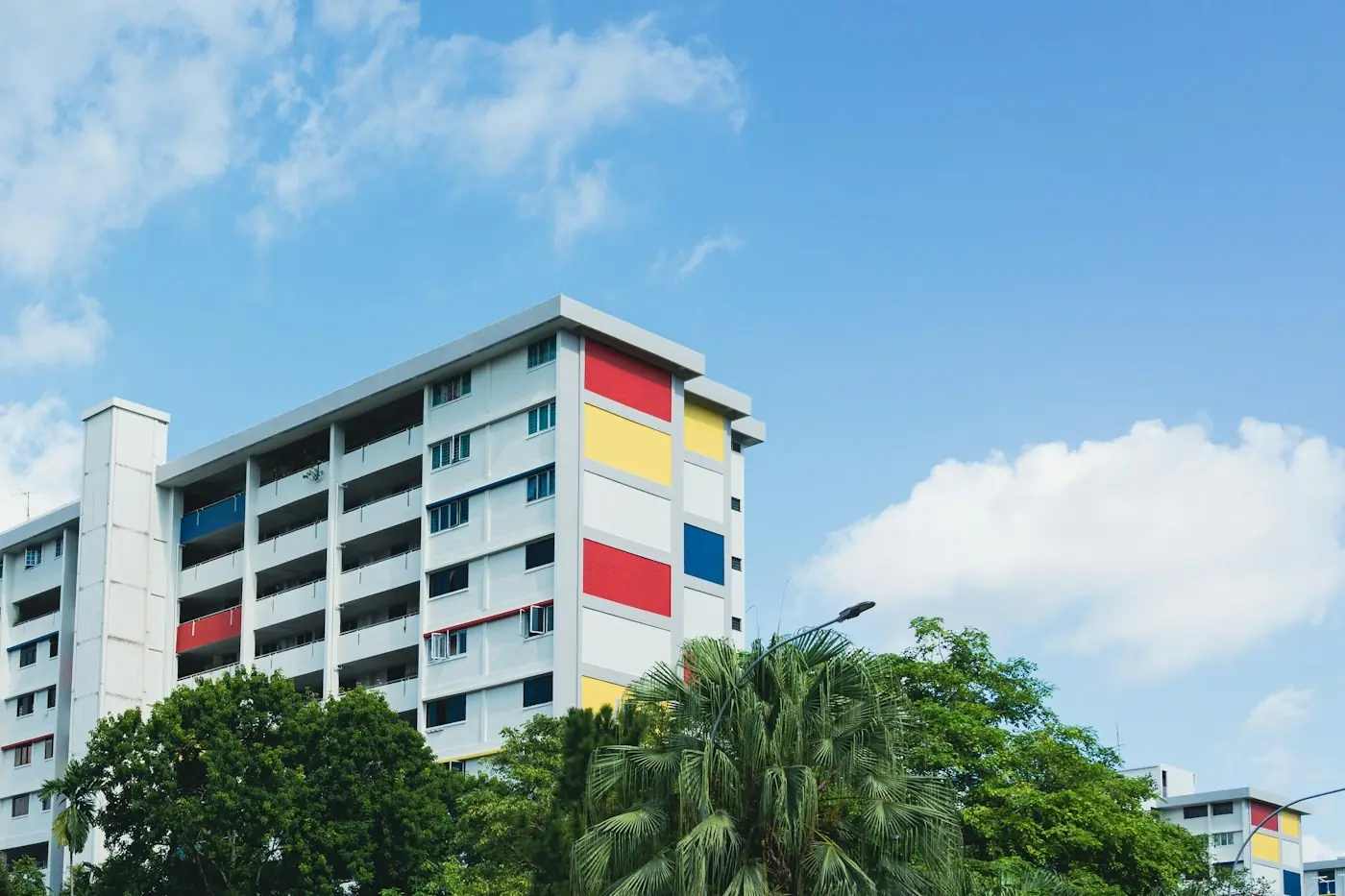
Since 1 April 2016, HDB has allowed a change in flat ownership, other than through a sale, only for these reasons: marriage, divorce, death of an owner, financial hardship (including family members joining to help pay the loan), renunciation of citizenship, and medical reasons such as a chronic illness where the owner wants to pass on the flat. HDB looks at other situations case by case.
Before 2016, owners could transfer their share to a spouse or immediate family member more freely, and some used that to buy private property without ABSD. HDB said at the time that the change came from a regular policy review rather than a move against that use, but the effect is the same: wanting to buy a second property is not one of the listed grounds.
HDB’s own page describes four kinds of change (adding, removing or replacing an owner, or an outright change), says the new owners must be immediate family who meet eligibility rules, and puts processing at about four months once documents are in. Where a change is approved, conditions carry on afterwards, including a new five-year MOP for the new owners before they can sell or rent out the whole flat.
Many articles online still describe “decoupling your HDB” as if it were routine. We have not found any HDB statement that supports that, so treat any plan built on it with care, and ask HDB directly about your case.
What HDB owners can do instead
If you own an HDB flat and want a private home, there are three realistic routes.
| Route | ABSD | What to watch |
|---|---|---|
| Sell the flat first, then buy | None on a first private home | Timing your move; see our HDB resale process guide |
| Buy private first, sell the flat within six months | Pay 20% upfront, claim a refund if eligible | Married couples with at least one citizen buying jointly; confirm IRAS’s current conditions |
| Keep the flat after MOP and buy private | 20% on the private home | Cash for ABSD, a lower LTV if you still have a loan |
During the five-year Minimum Occupation Period you can’t buy private property at all, so all three routes start after your MOP date.
The middle route rests on a rule MOF announced in January 2013: a married couple who buy a second home can get the ABSD refunded if they sell their first home within six months of buying a completed property, or within six months of TOP or CSC for an uncompleted one. MOF tied the six months to HDB’s own rule that flat buyers dispose of other property within six months. IRAS publishes the current remission conditions, which we could not read in full when checking, so confirm them with IRAS or your lawyer before you sign.
If you keep a loan on the flat while borrowing for the new home, MAS rules cut the bank’s loan-to-value limit on the second loan to 45%. Our HDB loan vs bank loan guide covers the limits.
How private property decoupling works
There are two ways to decouple a private home. In a gift, one owner transfers their share for nothing. The property must have no mortgage on it, so any loan and CPF charge must be cleared first. In a part-sale, one owner sells their share to the other at market value under an Option to Purchase or sale agreement. This is the usual route when there is still a loan, because the remaining owner can take a new loan in their own name to pay for the share.
Afterwards, the departing owner owns no residential property and can buy their next home without ABSD. The remaining owner now owns 100% of the first home. If they own no other home, no ABSD applies to the share they took over.
What decoupling costs
The biggest single cost is buyer’s stamp duty, paid by the person taking the share. It’s charged on the market value of the share, using the standard rates in force since 15 February 2023.
| Portion of value | BSD rate |
|---|---|
| First $180,000 | 1% |
| Next $180,000 | 2% |
| Next $640,000 | 3% |
| Next $500,000 | 4% |
| Next $1,500,000 | 5% |
| Above $3,000,000 | 6% |
For a condo worth $1.6 million held 50:50, the share transferred is worth $800,000. The stamp duty on that is $18,600.
The other costs:
| Cost | What we found |
|---|---|
| Legal fees | Around $3,000 to $6,000, depending on loan, CPF and property type (Yuen Law, 2026) |
| Valuation | Recommended to fix market value; fee not confirmed |
| CPF refund | The departing owner’s CPF used for the home, plus accrued interest, goes back to their CPF account |
| Refinancing | The remaining owner’s new loan, any early redemption penalty, and legal costs on the loan |
| Seller’s stamp duty | Applies if the transfer falls inside the holding period |
The CPF refund is easy to underestimate. The departing owner gets their CPF principal and interest back into their own account, which helps them buy the next home, but the remaining owner has to fund that sum through the price of the share, usually with a bigger loan.
Seller’s stamp duty depends on when you bought. For homes bought on or after 4 July 2025, the holding period is four years, with rates of 16%, 12%, 8% and 4%. For homes bought from 11 March 2017 to 3 July 2025, it is three years at 12%, 8% and 4%. A transfer within that window can wipe out much of the saving.
Weigh the total against the ABSD you’d avoid. On a $1.5 million second home, 20% ABSD is $300,000. Decoupling costs a fraction of that in most cases, which is why it’s popular.
The risks
Decoupling saves tax, but it moves real ownership and real debt.
The remaining owner must qualify for the new loan alone, under TDSR’s 55% limit. A couple who could afford the loan together may find one income isn’t enough.
The departing owner gives up their legal interest in the home. If the relationship breaks down, that share doesn’t come back automatically.
Gifts can be undone if the person who gave the share is made bankrupt within three years, and part-sales in that window can be checked to see that they were at fair market value.
IRAS watches arrangements built mainly to avoid ABSD. According to Yuen Law, IRAS recovered about $60 million in stamp duty in 2024 from buyers who misused 99-to-1 ownership splits, and in 2026 the Court of Appeal considered when such splits can breach the Stamp Duties Act. Penalties can include the full ABSD, a 50% surcharge, and up to four times the unpaid amount.
Before you decide
- If you own an HDB flat, check your MOP date and ask HDB whether any ownership change applies to you. Don’t assume decoupling is available.
- If you own private property jointly, get a valuation and a lawyer’s quote, and work out stamp duty, CPF refunds, refinancing and any SSD.
- Check that the remaining owner can carry the loan alone under TDSR.
- Compare the total with selling first, or buying first and claiming the ABSD refund.
This page is general information, not legal or tax advice. Decoupling changes legal ownership, so speak to a conveyancing lawyer and check with HDB and IRAS before you act.
Common questions
Can I decouple my HDB flat to buy a condo without ABSD?
Generally no. Since 1 April 2016, HDB allows a change in flat ownership only for marriage, divorce, death of an owner, financial hardship, renunciation of citizenship and medical reasons, with other cases reviewed one by one. Buying private property is not a listed reason.
How much does decoupling cost?
The main costs are buyer's stamp duty on the market value of the share transferred, legal fees of around $3,000 to $6,000, a valuation, and any bank penalty for refinancing. The departing owner's CPF must also be refunded with interest, which the remaining owner effectively funds. On a 50% share worth $800,000, the stamp duty alone is $18,600.
Can I keep my HDB flat and buy a private property?
After the Minimum Occupation Period, a Singapore Citizen can generally keep an HDB flat and buy private property, but the private home counts as a second property and attracts 20% ABSD. During the MOP you cannot buy private property at all.
Is there a way to get ABSD back if I am upgrading from HDB?
Married couples with at least one Singapore Citizen who buy their second home jointly have been able to claim an ABSD refund if they sell their first home within six months, under a rule MOF set in 2013. Check IRAS's current conditions before relying on it.
Is a 99-to-1 split a safe alternative?
It carries real risk. IRAS reported recovering about $60 million in 2024 from buyers who used 99-to-1 structures to avoid ABSD, and the Court of Appeal considered such arrangements in 2026. Get legal advice before using one.
Get a shortlist
Answer four questions and we'll send condos that fit, with the all-in cost in SGD.
Sources
Facts on this page were checked against these sources on 12 October 2026.
- HDB: Change in flat ownership (not through a sale)
- Home & Decor: HDB tightens flat ownership transfers (May 2016)
- PropertyGuru: HDB decoupling not permissible (Oct 2018)
- PropertyGuru: HDB ownership transfer eligibility and application guide (May 2020)
- Yuen Law: Decoupling private property ownership in Singapore (June 2026, updated July 2026)
- MOF: BSD rates for residential property from 15 Feb 2023
- MOF: Extension of SSD holding period and higher SSD rates (from 4 July 2025)
- MAS: Macroprudential policies in Singapore (ABSD, LTV, TDSR)
- MOF: Six-month transition for ABSD refund, in line with HDB rules (Jan 2013)
- IRAS: Remission of ABSD for a married couple
- CPF Board: How much to refund when selling or transferring property (updated 17 June 2026)
- LifeSG: Sell an HDB flat (MOP)
Read next
 Tool
ToolShould I Rent Out My HDB Flat or Sell It? Take the Quiz
Nine questions show what renting out your HDB flat really earns after tax and costs, what selling frees up, and which fits your next move.
 Tool
ToolStamp Duty Calculator Singapore: BSD, ABSD and Seller's Stamp Duty in One
Work out Buyer's Stamp Duty, ABSD for joint buyers and Seller's Stamp Duty on a Singapore home, with the 2025 SSD rules and the ABSD refund for upgraders.
 Guide
GuideABSD in Singapore 2026: Rates, Remission for Upgraders, Joint Buyers and Decoupling
ABSD rates in 2026 for Singapore citizens, PRs and foreigners by property count, the 6-month remission for upgraders, joint purchase rules and how decoupling fits in.
 Guide
GuideHDB Resale Process 2026: How to Sell Your Flat, Step by Step
Selling an HDB flat in 2026: MOP, Intent to Sell, the buyer's HFE letter, the OTP, Request for Value, the resale application, fees and an 8-week completion.
 Tool
ToolProperty Tax Calculator Singapore 2026: HDB, Condo and Rented-Out Homes
Work out your 2026 property tax from your annual value, with the one-off rebate for owner-occupiers and the higher rates for rented-out homes.